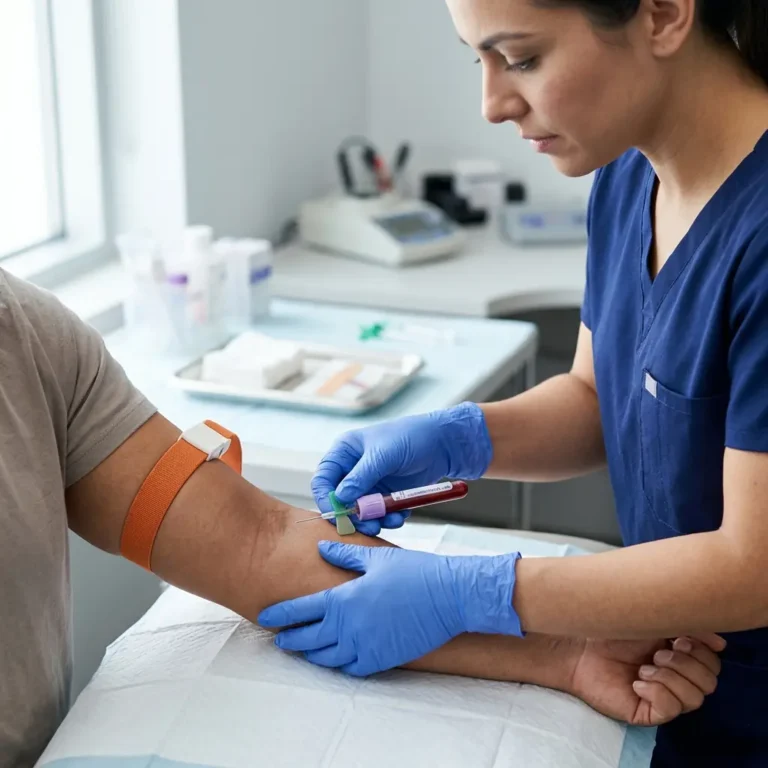

Description
About this course
This course is for phlebotomists, nursing associates and other clinical staff who have completed venepuncture training and want to add peripheral IV cannulation to their skills. It also suits those working in acute care settings where intravenous access is required.
Over one 7-hour day, you combine theory with supervised practice on high-fidelity manikin arms, and leave with the skills and confidence to perform peripheral IV cannulation in clinical settings.
- Theory and practical training in a single day
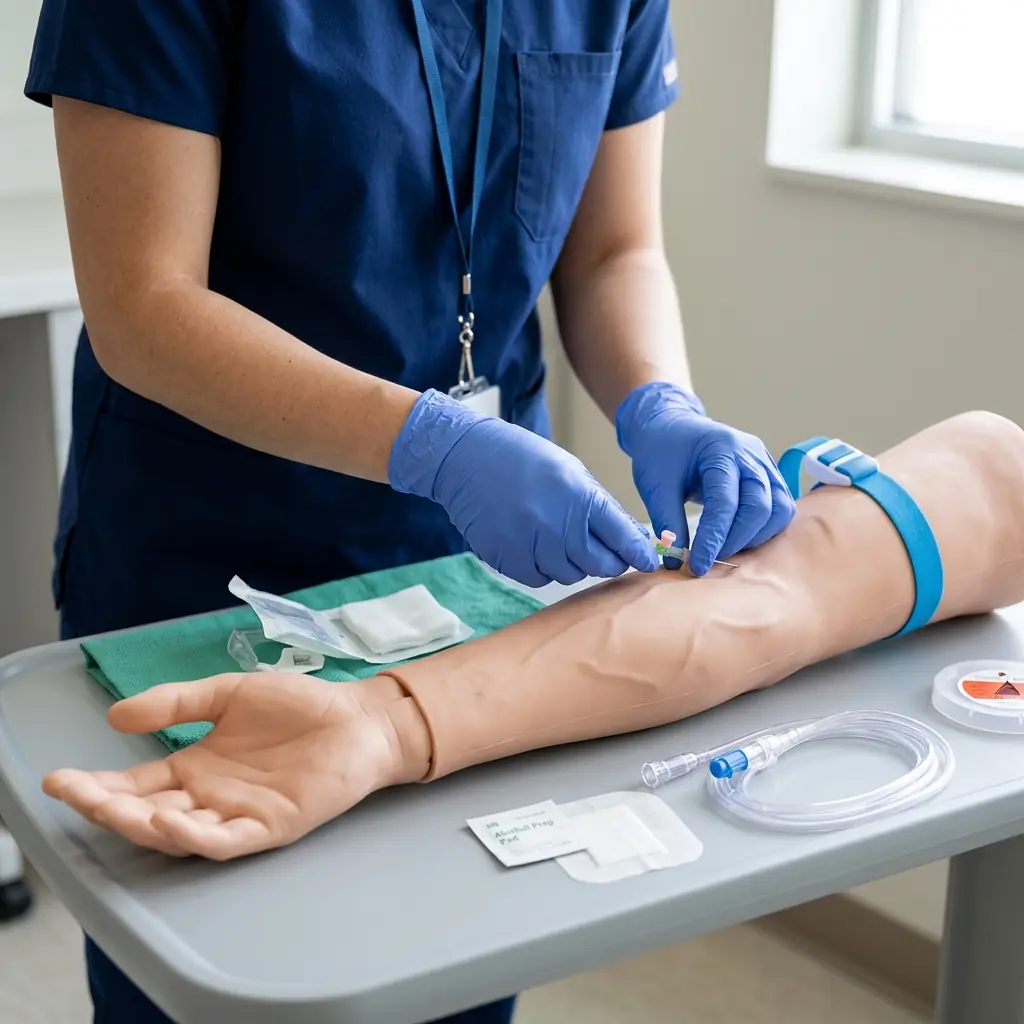
- High-fidelity manikin arms, with no live bleed
- Free Cannulation Booklet, worth £25
- Supervision from experienced clinical trainers
- Competency certificate and sign-off sheet for your portfolio
- CV review and advice for your job applications
All you need to know
Certificate
Peripheral IV Cannulation Competency Certificate (CPD), issued by Open Academy London.
Duration
1 day, 7 hours in total.
Delivery
In person at our allocated London training location. Both parts are mandatory.
Pre-course reading
A Cannulation Booklet worth £25, free of charge and yours to keep.
Equipment
Your booklet, manikin arms and all practical training materials are included in your course fee.
Assessment
A theory knowledge check and a practical assessment, both of which you must pass.
How does it work?
-
Enrol
Click Apply Now and complete the application form. You then sign the necessary documents and make your payment.
-
Pre-course reading
Before your start date, you receive your course information and the Cannulation Booklet. Read it thoroughly before your session.
-
Theory class
Learn cannulation techniques, infection control principles (ANTT), venous anatomy and the clinical reasoning needed to select suitable veins. Training includes interactive lectures, video demonstrations and case study discussions, and ends with an assessment you must pass to progress.
-
Practical class
On the same day, you practise on high-fidelity manikin arms that replicate human tissue and venous anatomy. Under supervision, you work on vein selection, aseptic preparation, insertion technique, flushing and securing the cannula, then complete your practical assessment.
You practise on manikin arms only. There are no live blood draws and no practice on fellow participants.
What you will learn
By the end of the course, you will be able to:
Professional practice
- Understand practitioner requirements in line with healthcare standards
- Apply strategies for maintaining clinical competence
- Recognise the legal implications of poor practice
- Understand documentation requirements
- Document the procedure to professional standards
Infection control
- Understand the causes of infection
- Apply the Aseptic Non-Touch Technique (ANTT) process
- Prevent and manage infection risks
Anatomy and vein selection
- Understand peripheral venous anatomy and vein selection criteria
- Identify suitable and unsuitable veins for cannulation
Performing cannulation safely
- Identify patient and environmental factors that affect procedures
- Prepare the patient for the procedure
- Select the correct equipment for different patient needs
- Understand the cannula gauge system and appropriate selection
- Recognise potential complications during and after cannulation
- Prevent and manage common adverse effects, including phlebitis, infiltration and haematoma
- Recognise, prevent and manage extravasation
- Perform peripheral IV cannulation safely and effectively
Who is this course for?
Anyone who has completed phlebotomy or venepuncture training, including:
- Phlebotomists
- Nurses
- Nursing associates
- Healthcare assistants
- Paramedics
- Medical students
- Registered healthcare professionals seeking a refresher
Entry requirements
- Prerequisite training: a Phlebotomy Competency Course or equivalent venepuncture training.
- Hepatitis B vaccination: at least 2 doses, unless you have recently completed the course or can show evidence of immunity. Your local pharmacy or healthcare provider can arrange this.
- English: you must communicate and read English to a good standard.
Career and progression
Cannulation skills improve your employability for roles in acute care settings, hospitals and community healthcare. Your certificate and competency sign-off sheet evidence your CPD and strengthen your job applications.This training can also support further study or careers such as:
- Medical Lab Technician
- Medical Assistant
- Nursing
Separate regulated qualifications are required for these roles.
Frequently asked questions
How long is the cannulation course?
It is a 1-day program with theory and practical sessions, 7 hours in total.
Where do I need to go for the training?
All training takes place in person at our allocated London training location.
Do I need any prior training before this course?
Yes. You must have completed a Phlebotomy Competency Course or equivalent venepuncture training before enrolling.
Will I practise on other participants?
No. All practical sessions use high-fidelity manikin arms that replicate human tissue and venous anatomy. There is no live bleed and no practice on fellow participants.
Do I get a certificate?
Yes. When you pass both the theory and practical assessments, you receive a Peripheral IV Cannulation Competency Certificate.
Do you offer work experience or job placement for cannulation?
No. This course focuses on theoretical and practical training only, and work experience and job placement are not included.
Can I get a job after this course?
The course strengthens your clinical skills and employability for roles that need IV cannulation competence, in acute care, hospitals and community healthcare.
Do you help find a job after the course?
We do not directly place you in a job, but we provide a course completion certificate and competency sign-off sheet for your professional portfolio to support your job search.
Have a question about this course? Call our team on 0208 049 7448 and we will be happy to help.